
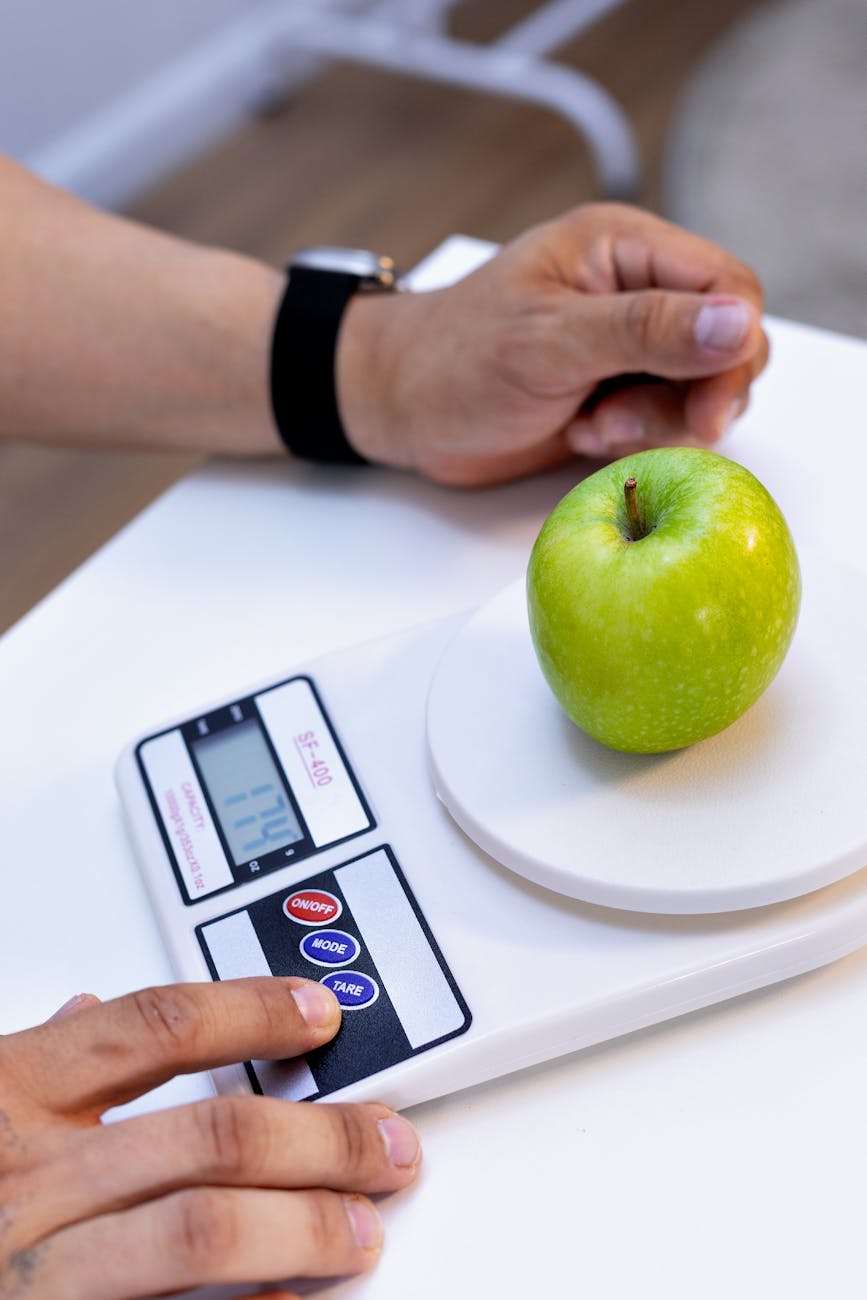
You must have read that every food has some energy/calories. Even the food you get from the market is labeled as 530 kcal or 100 kcal and stuff like that.
Basically, it means the amount of energy your body will get from that particular food.
Our body obtains calories from 3 main nutrients. And people track them. Because for them, tracking the macros means a lot.
I won’t be discussing all that in detail here.
But I’m here to discuss if calorie counting is really for you.
Do you even need them?
And what happens when we use this idea a lot?
Table of Contents
What is a calorie tracker, and why do we do it?
Calorie tracking or calorie counting is basically tracking or monitoring the energy/calorie content of the food/drink you consume. It’s like awareness or info we get with the food we eat.
People do it for various reasons like:
- Weight loss – where people have to eat fewer calories than they burn
- Weight gain – where people have to eat more calories to gain weight, particularly muscle
- Maintenance – where they have to eat as much as they burn
- Other reasons like following a fad, or trying to fit a dress
Here are 6 ways to burn 100 calories
I will share a calculator here so that you can easily learn how much you are supposed to eat in order to reach your goal.
But you know what? That’s the problem. Nowadays, everyone is following that, and that’s inviting serious problems.
Where did this idea come from?
Mostly, people who want to stay healthy and aware track their food. Seriously, not many understand the concept.
People don’t know how many calories they should eat, or how much is good for them.
But some people who track learn more about their food and the calories it contains.
These people have either seen it on the internet or learned from a nutritionist about how much they should eat and how they can track.
Social media plays another role because nowadays people promote lots of stuff online, calling it healthy or necessary, and then people want to use that thing for better tracking.
And most of those claims are misleading.
There are apps, devices, even rings, that help you track the calories you take and the calories you have to burn.
It gives an idea that we are in control and we are doing it right.
But why could calorie counting be a problem?
Hard to get it right
If I say it in very simple words, then it’s not for everyone.
Or let me say it this way: you can track calories, but you might end up doing it wrong.
Your tracker says you need 2300 kcal per day; that means you need to eat that much per day. Anything above regularly could mean weight gain, and below could mean weight loss.
Troubling, right? Well, there’s more. Eating 2300 kcal means you need to weigh everything to track it.
You need to consider so many points, like what type of food you are eating, and how you are balancing macros (carbs, protein, fats).
Look, you can have your 2300 kcal from a single pizza and still feel hungry 5 hours later.
Or you can weigh and measure everything and still couldn’t get it right.
Research suggests that two bodies (twins in this case) can have very different reactions to the same diet.
Coaches make you a plan, but you need to vary that always.
Tracking it constantly can make eating more complicated, and we may miss out on eating properly.
Nutrition deficiency
Calorie counting is becoming popular.
Nowadays, many coaches and food brands share the calorie count of the food they are sharing, which is great.
People can even make that dish as seen on the internet, which is great too.
However, the problem is that many times those diets are made for a specific purpose.
They give the idea like, “Hey, you need 20 gm protein? Try this,” and people even try them.
But then they are shaking up their calorie intake. They may feel full, without eating as many nutrients as they were supposed to have.
Generally, a doctor or registered dietitian can tell you properly about your diet.
With online resources, people follow and eat diets which may make them feel full, but in reality, crucial nutrients are ignored.
Also, let’s not forget it’s dangerous to do by yourself if you are under any medication or have any disease.
(Will discuss this more, so stay tuned.)
Calorie restriction can not only cause harm like hair loss, irritability, fatigue, and muscle loss, but in the long run, women can develop symptoms like irregular cycles, PCOS, and hormonal imbalance.
Even in men: low testosterone, slow metabolic rate, immune function drop, etc.
Meals feel like a task
Calorie counting may become boring after a point.
It’s true that those who want to follow a certain goal need to follow a certain diet.
That means they need to calculate everything they eat.
Athletes, celebs get a specific plan for everything, so they don’t always have to think about calorie counting.
However, if you are tracking your diet, it means it will be a calculative task.
You need to measure everything.
You may even avoid eating anything you like because you are being mindful of your diet.
You may stop enjoying food because you need to stick to the routine.
And emotionally, you will feel drained as your routine becomes restrictive.
Nowadays, most health coaches are mindful of your taste and preference, so they make meal plans accordingly.
However, if we are making a plan, we may end up making it hard, and it will feel like a task.
Inaccurate data
Often, tracking apps give the wrong idea.
They have standardized data, that this peanut butter will have this many calories, or these eggs may have this much protein, but in real time, that data can vary.
While you are thinking that you are doing it right, with the right quantity of food as seen in app/watch/site, that data can vary a lot.
One trial even reported that apps underestimated actual intake by 445 calories per day, which is a huge deal.
Ignoring hunger cues
People may ignore hunger cues if they are self-tracking because they want to stick to the strict diet they made for themselves.
They may feel hungry but don’t/can’t eat, and convince themselves to avoid food.
This not only affects their relationship with food but also makes them feel mentally fatigued.

I will discuss this more, how calorie counting can make you feel, in Part 2.
But overall, it can take a toll on mental health as well.
Conclusion
Can calorie counting work for you?
Yes, it can, but if done smartly.
It’s better to discuss it with a health coach or nutritionist.
It’s surely typical and may need a lot of knowledge of what and how to do things.
Calorie tracking is not just eating less; it’s about balance that doesn’t make you feel tired.
Often, calorie counting makes you feel more drained than usual.
This is why it’s important to consider everything before starting anything.
See you in Part 2





Leave a Reply